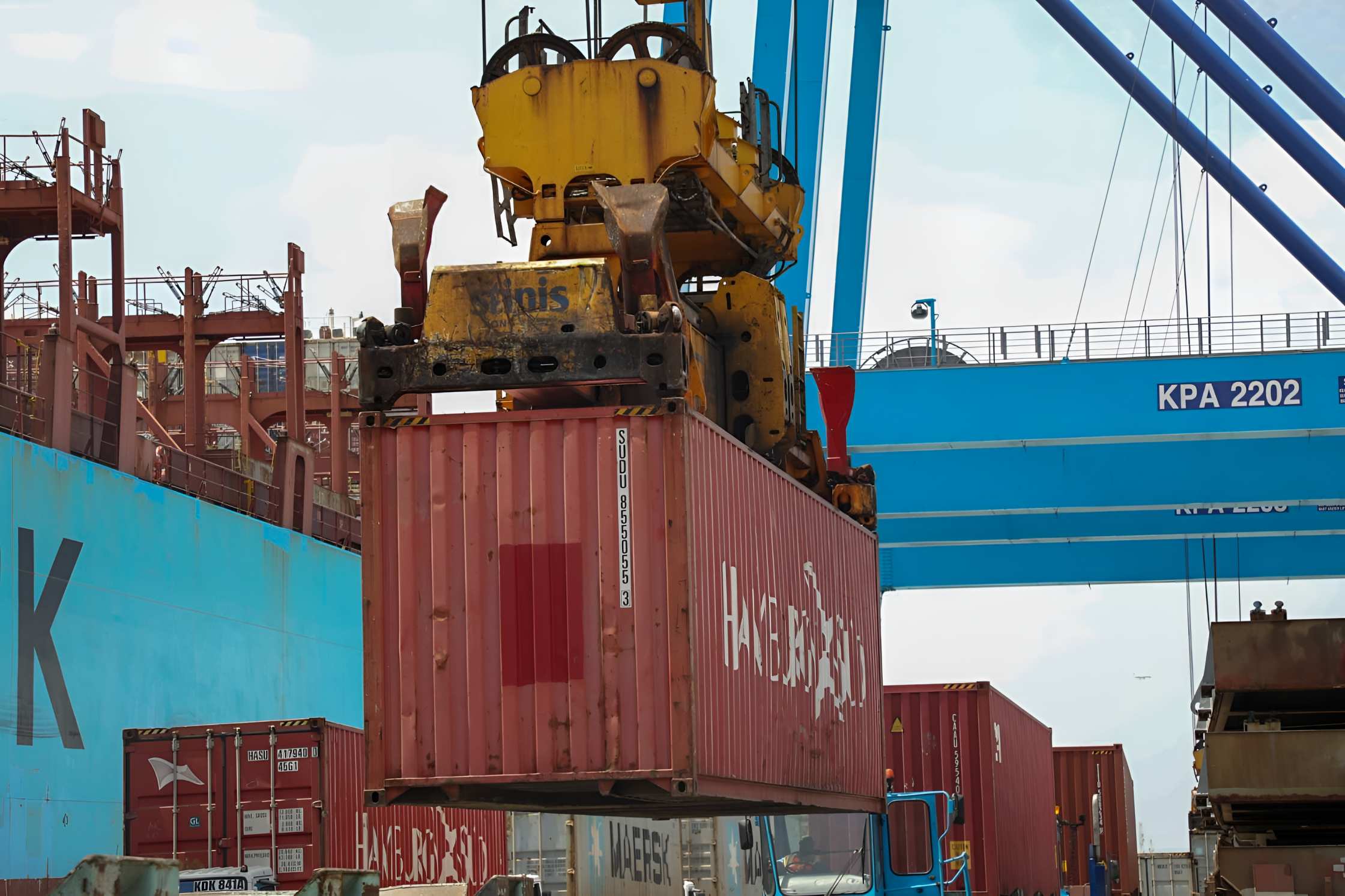
Kenya Ports Authority confirms cargo volumes through the Port of Mombasa rose to a record 45.45 million metric tons in 2025, up 10 percent from 2024.
Container traffic reached 2.11 million TEUs, while transit cargo surged by 19.5 percent, highlighting sustained regional trade growth.
According to data released on Thursday by the Authority, the Port of Mombasa handled 45.45 million metric tons of cargo between January and December 2025, representing a 10.0 percent increase compared to 40.99 million metric tons recorded in 2024.
The growth translates to an additional 4.46 million metric tons, reflecting rising demand across import, export and transit cargo segments.
Container traffic also posted notable gains during the period. The port handled 2.11 million Twenty-foot Equivalent Units (TEUs) in 2025, up from 2.00 million TEUs the previous year.
This represents an increase of 109,797 TEUs, or 5.5 percent, reinforcing Mombasa’s position as one of the busiest container ports along the East African coast.
Speaking during a media briefing to release the Kenya Ports Authority performance outlook for 2025, Managing Director Capt. William Ruto said transit cargo volumes followed a similar upward trend.
He announced that transit cargo rose to 15.88 million metric tons from 13.29 million metric tons in 2024, marking an increase of 2.59 million metric tons or 19.5 percent.
The Authority said the growth highlights Kenya’s continued role as a critical logistics corridor serving landlocked countries in the region, even as competition among regional ports intensifies.
Capt. Ruto also noted that every port facility under the Authority registered growth, with the Port of Lamu recording the most dramatic improvement during the year.
Lamu handled 799,161 metric tons of cargo in 2025, compared to just 74,380 metric tons the previous year.
The surge was largely driven by containerised cargo, with the port recording 55,687 TEUs in total container traffic over the period.
“With more shipping lines introducing regular services at Lamu, this is a promise for more cargo volumes through the port in the subsequent years,” said Capt. Ruto.
The inland waterway Port of Kisumu also posted strong gains, processing 496,516 metric tons of cargo in 2025, up from 295,516 metric tons in 2024.
The increase of 163,085 metric tons represents a 55.0 percent growth, reaffirming renewed activity on Lake Victoria transport routes.
Kenya Ports Authority attributed the strong performance to a combination of rising trade volumes and sustained investment in port infrastructure.
The Captain said the Authority is actively developing facilities to meet growing demand, with key projects focusing on the expansion of berths and yard space.
Among the major developments are berths 19B, 23 and 24, which are expected to create additional capacity of 1.4 million TEUs once completed.
The projects are aimed at easing congestion, improving turnaround times and supporting future growth in container traffic.
The Authority is also upgrading its Terminal Operating System, which Capt. Ruto said is currently 40 percent complete, alongside gates automation projects that have reached 60 percent completion for gates 23 and 24.
These upgrades are intended to enhance efficiency, security and cargo handling accuracy.
In addition, acquisition and modernisation of equipment is at an advanced stage, even as Kenya Ports Authority continues to strengthen collaboration with industry players to streamline services and improve overall port performance.
The 2025 results point to a ports sector that is expanding beyond traditional strongholds, with emerging facilities playing an increasingly significant role in Kenya’s trade and logistics landscape.































Comments
Sign in with Google to comment, reply, and like comments.
Continue with Google